

Last week, I had the honour of listening to Crafoord Prize Laureate, Veerabhadran (Ram) Ramanathan speak at the Royal Swedish Academy. Ram is not only an outstanding climate scientist who laid the foundation for our understanding of how aerosols (small particles that gather in the air) contribute to climate change. He is also a very kind person who cares deeply for his fellow human beings – especially the poor – and for nature. Ram has served as advisory to the Pope on matters relating to climate. With his Bending the Curve education initiative, Ram seeks to empower one million climate warriors. For me, Ram is an inspiration.
I have heard other climate scientists say that global warming is accelerating, and I can even see for myself when I try comparing global temperature data with a linear fit to the data.
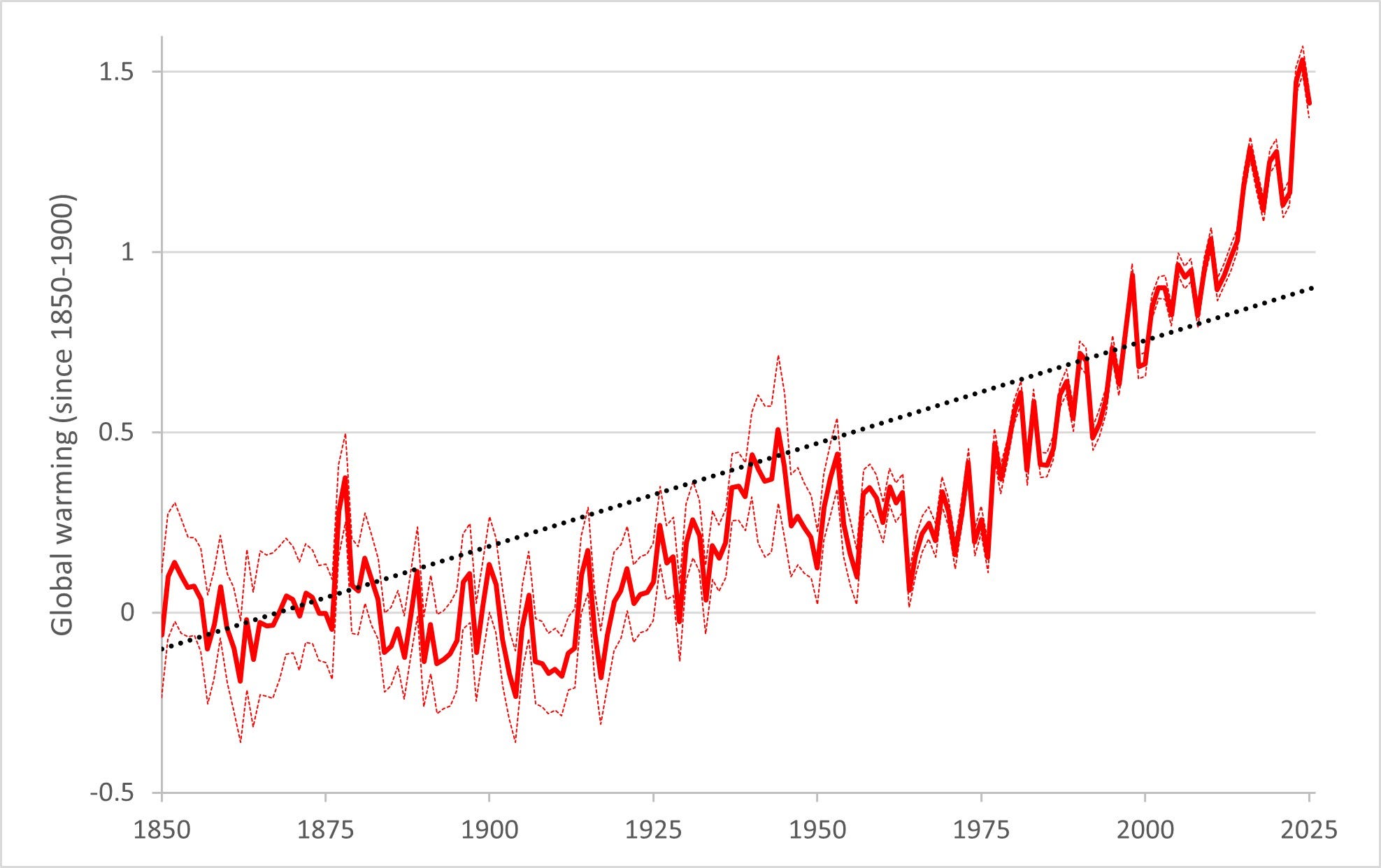
But when Ram – the climate scientist I respect most of all – says it and explains why it is happening, I find myself convinced.
This is why global warming is happening faster:
The air we breathe is not just air. A single breath can contain a few million very small particles called aerosols. These particles – which are suspended in the air – can – for example – be mineral dust, sea salt, soot particles or sulfate particles (formed from gases erupted by volcanoes or from burning fossil fuels).
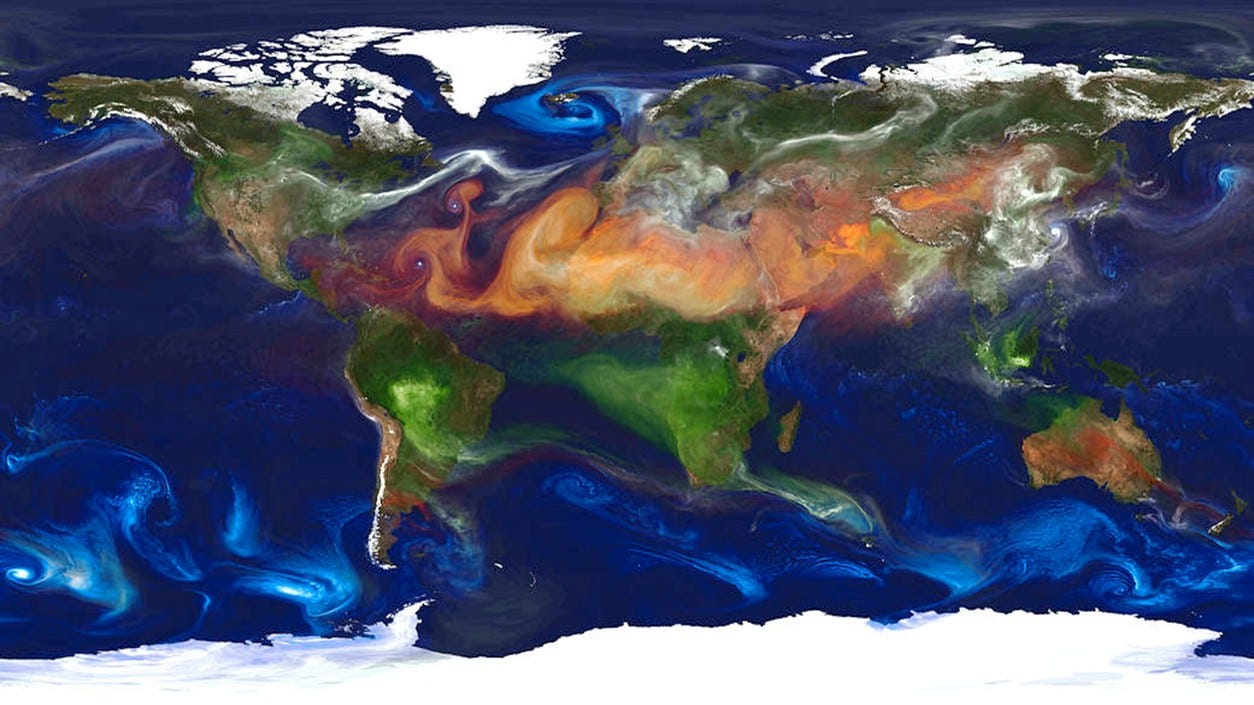
Aerosols affect our health and the climate. The manner in which aerosols affect climate is complex. Darker aerosols (e.g., soot particles) can warm the climate by trapping heat, whereas brighter aerosols (e.g., sulfate emissions from volcanoes and burning fossil fuels) can cool the climate by reflecting sunlight. The net (combined) effect of aersols on the climate is cooling and the amount of cooling is around half a degree (Celsius) according to the IPCC.
This presents us with an apparent Catch-22:
We must stop polluting the air with sulfate emissions from burning fossil fuels because the aerosols that these emissions produce are extremely harmful to our own health – aerosols are associated with 7 million permature deaths annually.
The good news is that we are reducing this kind of pollution by moving away from burning fossil fuels towards clean energy. This will save lives.
The bad news is that by reducing this kind of pollution – which we must do because we must save lives – we are also removing the cooling effect of aerosols and removing this cooling effect makes global warming happen even faster.
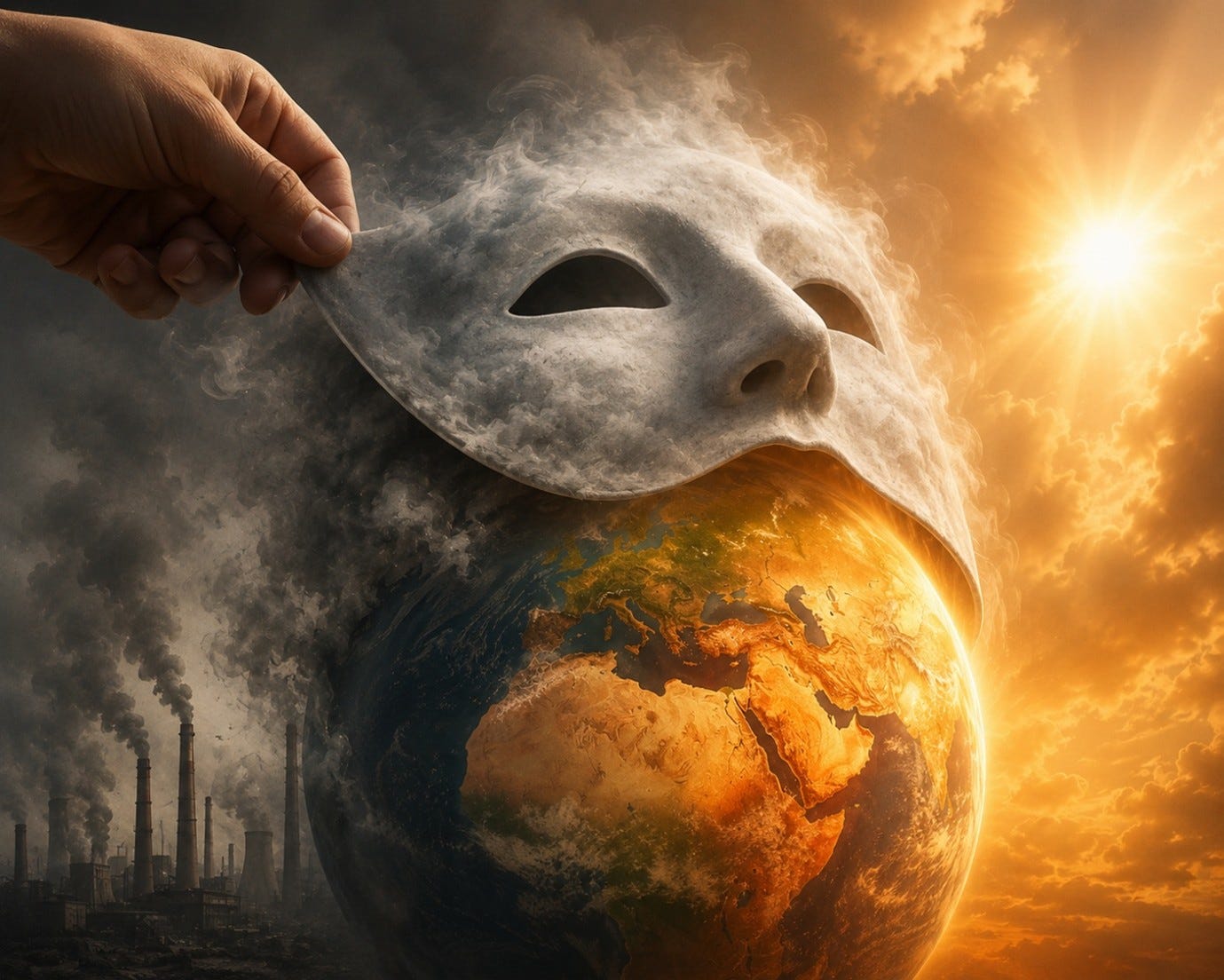
We can think of this as taking of a mask – By polluting the air with aerosols, we have “masked” around half a degree of global warming. This means that the 1.4°C of global warming, we are currently suffering from, might actually be closer to 1.9°C.
But this Catch-22 is an apparent one, because there is a solution.
So what’s the solution?
The answer is a straightforward one.
We must reduce greenhouse gas emissions and we must do so urgently.
And – yes – we might see accelerated global warming. But this will be short-lived. It will be “overtaken” by cooling and climate recovery if we rapidly reduce greenhouse gas emissions. And climate recovery will be long-lived.
The reason is that aerosols are short-lived climate pollutants, whereas greenhouse gases (especially carbon dioxide) are long-lived climate pollutants. This means that climate change caused by aerosols will be brief, whereas climate change caused by greenhouse gases will last for a very long time.
Thus, rapidly reducing greenhouse gas emissions remains the only safe way to reduce global warming.
Accelerated global warming is a warning.
We must respond quickly by reducing greenhouse gas emissions to protect ourselves and to protect the 8.7 million other species with which we share our common home.
And to conclude with a quote from Ram – “We are never going to solve this problem by pointing fingers. We are all one planet. We have to work together.”
How can I be a part of the solution?
For an answer to this question that is tailored to your life situation, I recommend SHIFT by climate scientist Kimberly Nicholas and the team at Project Drawdown. I found that – for my life situation – my most impactful climate action is to elect leaders who’ll make and implement strong climate policies.
And – before you go – thank you for reading this post! If you liked it, please click on the ❤️ at the top (or bottom) of the page. That way I know that this post meant something to you.
Thank you! We must also regreen the arid areas that humans have made arid. Today we know fairly well how to do this. Regreening land cools the earth and creates humidity that cools the atmosphere.
From environmental crises like Australia’s legal action against 3M over toxic PFAS contamination, to rising inequality, labor unrest, and climate extremes, we are witnessing the consequences of decisions delayed and responsibilities avoided.
This is not just a moment of disruption. It is a moment of reckoning.
Accountability can no longer be optional.
When corporations pollute, ecosystems collapse, and public health is put at risk, justice must follow not years later, but now.
At the same time, workers are demanding dignity, citizens are demanding safety, and nations are demanding fairness in a system that often protects power over people.
Leadership today must rise above short-term gains and fragmented thinking.
It must:
Enforce environmental responsibility globally
Protect workers in evolving economies
Invest in climate resilience urgently
Ensure that growth does not come at the cost of humanity
The cost of inaction is no longer theoretical. it is visible, measurable, and accelerating.
History will not remember how complex these challenges were.
It will remember whether leaders chose courage over convenience.
The time to act is not coming.
It is already here.